
![Effective Anonymization of Sensitive Data — Guardrails in Bielik vs n8n [E010]](/_next/image?url=%2Fassets%2Fblog-images%2Fyt-videos%2FVzGEzDi8fAs.jpg&w=2048&q=75)
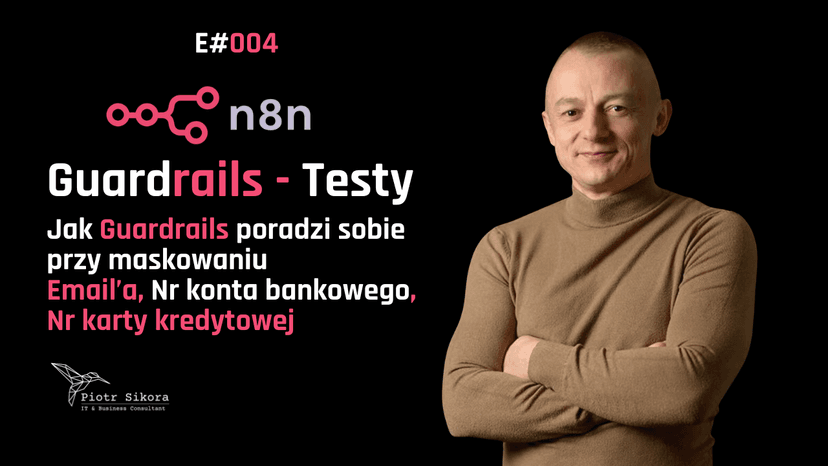
Which approach anonymizes sensitive data better: the Polish Bielik language model acting as a guardrails layer, or the built-in Guardrails node in n8n? In this episode I pit both against the same test data.
What I compare
- Detection accuracy for personal data: names, addresses, phone numbers, emails.
- How both solutions behave on Polish-language text.
- Configuration effort and the places where each approach falls short.
What you will learn
- How to build an anonymization pipeline based on an LLM (Bielik).
- How to configure the n8n Guardrails node for PII detection.
- How to test anonymization quality before trusting it in production.
This is the third installment in a series on data safety in AI automations — earlier episodes are collected on the Academy page.
Watch the episode
The video is available on YouTube: youtube.com/watch?v=VzGEzDi8fAs.
All episodes are collected on the Automation Academy page (in Polish). Subscribe to my YouTube channel so you do not miss new material.
The video is in Polish; this post summarizes what it covers.







Comments