

© Piotr Sikora 2026 | All Rights Reserved

Extending an n8n OCR workflow to process many receipts or invoices in one run: adjusting the AI agent prompt, handling an array of objects and saving multiple rows to Google Sheets automatically.

How to check variable values in an n8n workflow with the IF and Switch nodes — when a simple condition is enough and when complex logic reads better as a Switch.
An n8n workflow that automatically fetches new Gmail messages, analyzes them with an AI Agent and creates ready-to-review reply drafts in your inbox.
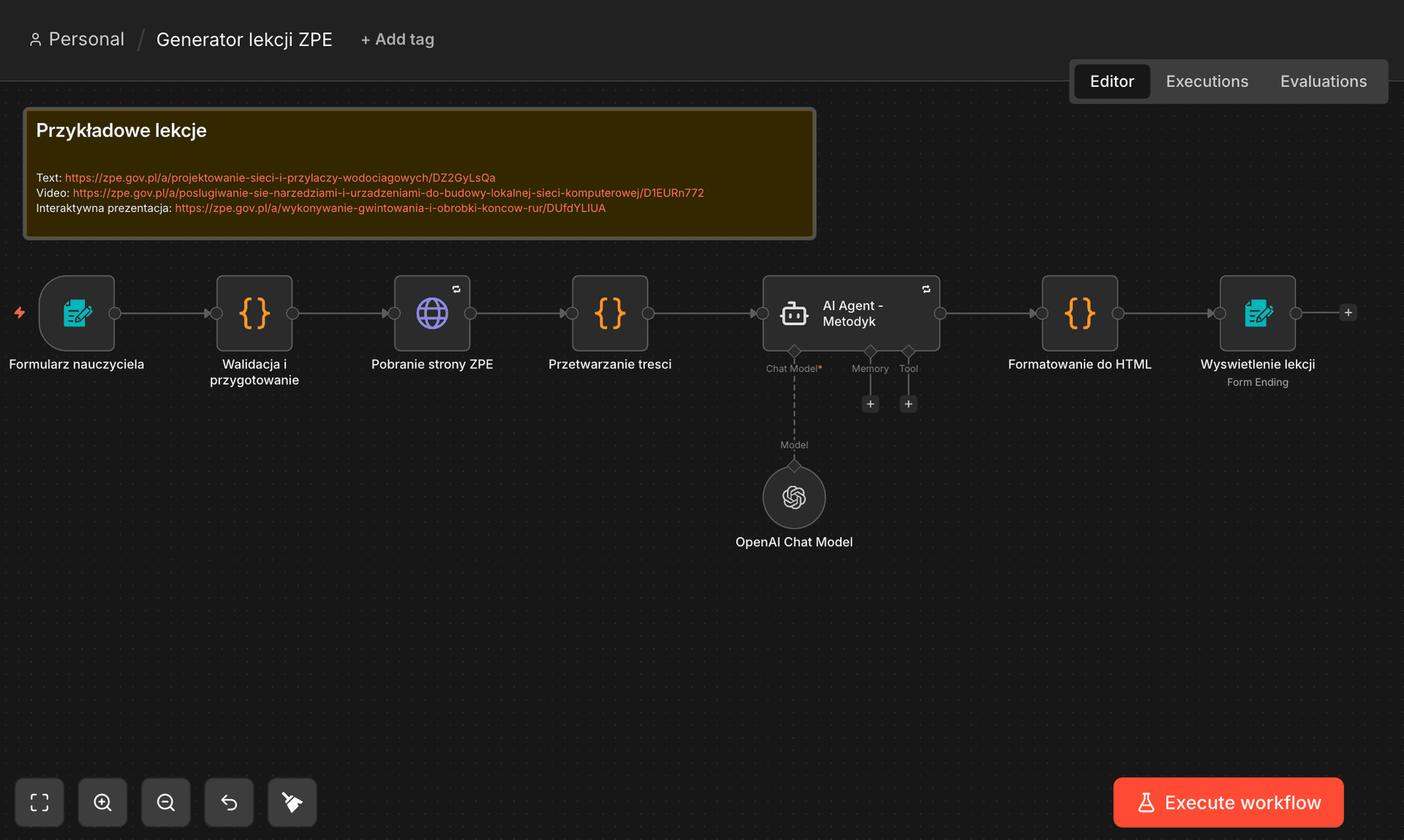
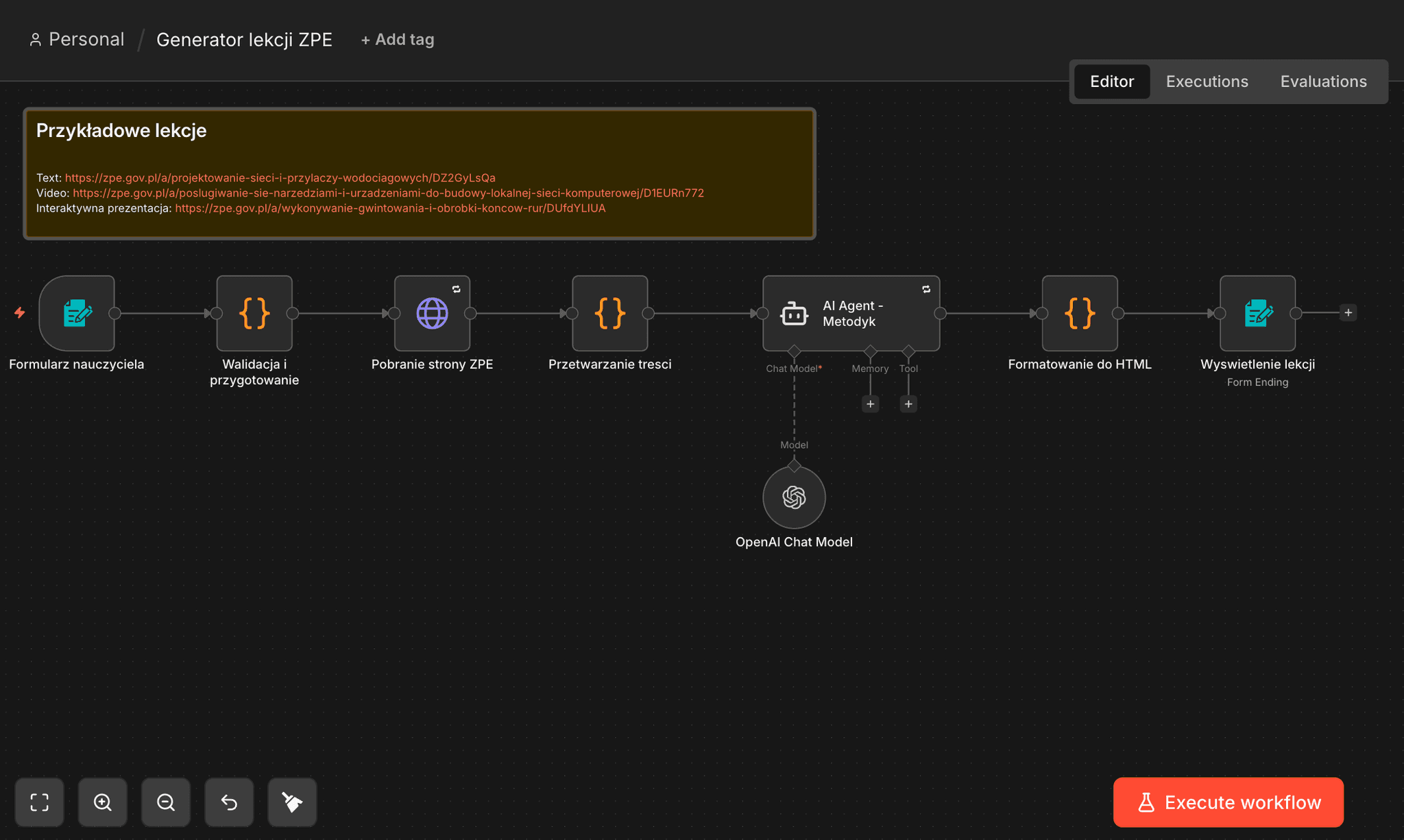
An n8n workflow that turns an e-material from Poland's Integrated Education Platform (ZPE) into a complete teaching package: lesson plan, worksheet, quiz and practical exercises.
A simple n8n workflow that automatically collects LinkedIn profiles based on keywords — using a form, Serp API and Google search. Useful for recruiting and sales.
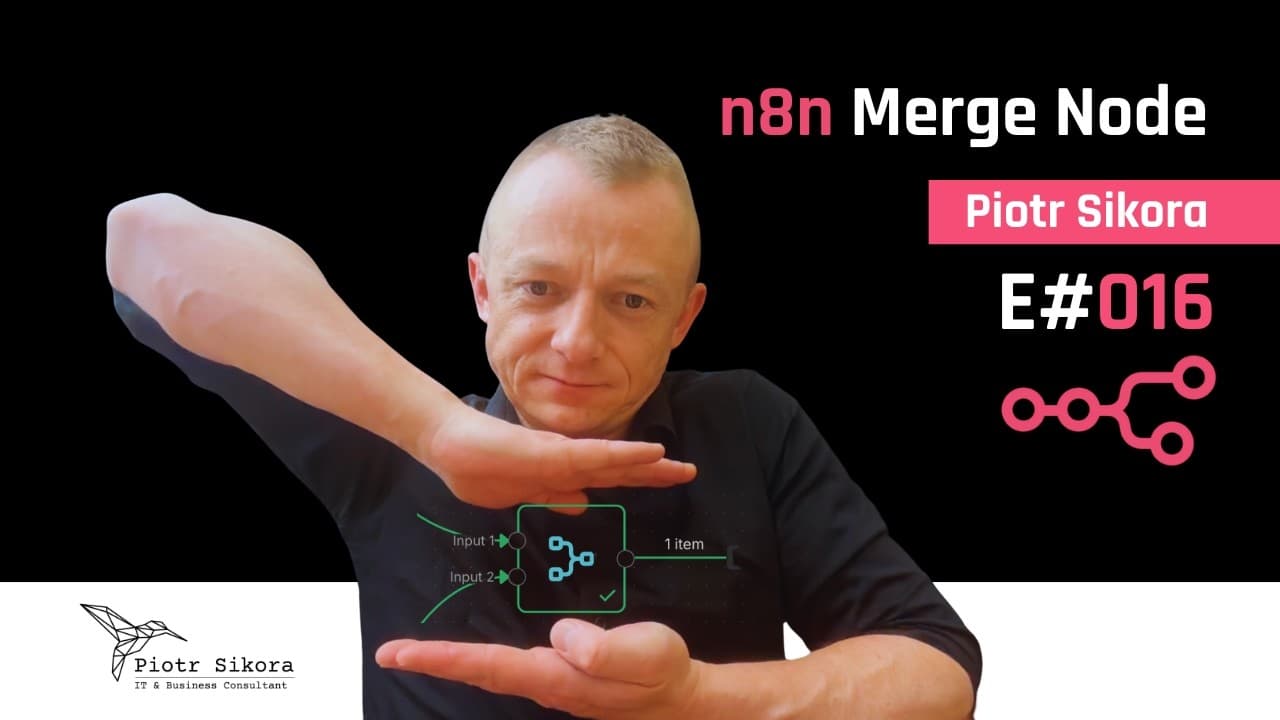
How the n8n Merge Node works: combining branches and objects with Append, Combine and Choose Branch modes, and dealing with data clashes.
![Automating Receipt OCR into Google Sheets with AI [E015]](/_next/image?url=%2Fassets%2Fblog-images%2Fyt-videos%2FhQL3Ox8J1cY.jpg&w=1920&q=75)
An n8n workflow that uses AI to recognize data from photos of receipts and invoices and writes it straight to Google Sheets — from chat node, through file upload, to saving the data.
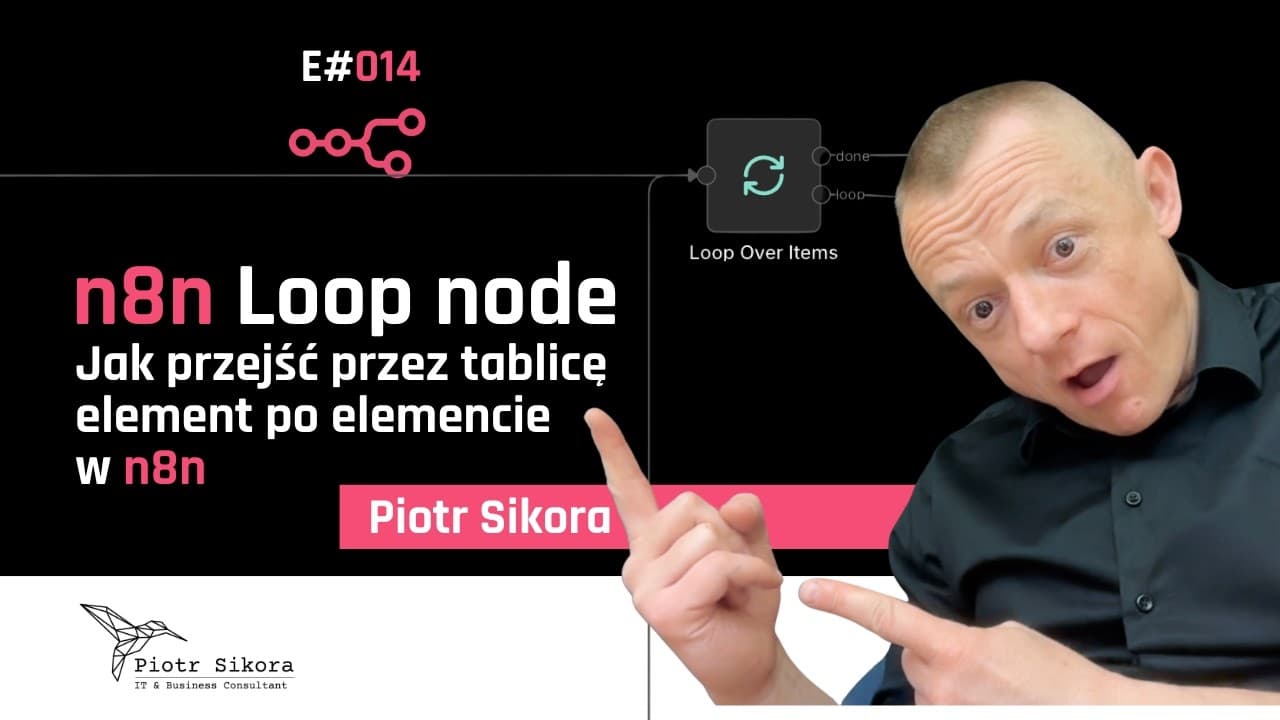
Iterating over array items in n8n: building a workflow that processes items one by one, makes HTTP requests and handles errors along the way.
![Error Handling in n8n #2 — HTTP Requests and Dedicated Error Workflows [E013]](/_next/image?url=%2Fassets%2Fblog-images%2Fyt-videos%2Fj9XY-ID48Rw.jpg&w=1920&q=75)
Part two of the n8n error-handling series: node error-handling modes, catching HTTP request failures and dedicated error workflows.
![How to Use Sub-workflows in n8n [E012]](/_next/image?url=%2Fassets%2Fblog-images%2Fyt-videos%2F79boE177I9g.jpg&w=1920&q=75)
Splitting a large n8n workflow into smaller reusable sub-workflows: passing data between workflows and building an architecture that is easy to maintain.
![How to Handle Errors in n8n (Error Handling) #1 [E011]](/_next/image?url=%2Fassets%2Fblog-images%2Fyt-videos%2FnxRNdK1AZVQ.jpg&w=1920&q=75)
Fundamentals of effective error handling in n8n workflows: what happens when a node fails, the available error-reaction modes and where to start cleaning up error handling.
![Effective Anonymization of Sensitive Data — Guardrails in Bielik vs n8n [E010]](/_next/image?url=%2Fassets%2Fblog-images%2Fyt-videos%2FVzGEzDi8fAs.jpg&w=1920&q=75)
Hands-on Guardrails tests: comparing sensitive-data anonymization by the Polish Bielik LLM against the built-in Guardrails node in n8n.
How to use the Polish Bielik model as a local guardrails layer in n8n, anonymizing personal data before it is sent on to AI models.
Testing the n8n Guardrails node on data typical for a law firm: emails, card numbers and IBAN account numbers, checking anonymization quality with GDPR in mind.
How to define the system message in an n8n AI Agent so every query is handled according to a fixed role, style and set of rules.
AI returning overly long or messy answers? I show how the Structured Output Parser in n8n forces exactly the data format your workflow needs.
![Data Tables in n8n — Creating a Table and Adding Records [005]](/_next/image?url=%2Fassets%2Fblog-images%2Fyt-videos%2Fe005_data_tables.png&w=1920&q=75)
Saving chat prompts and building your own database inside an AI workflow using n8n Data Tables — creating a table and adding records step by step.

Learn how to secure user data in n8n AI agents using the Guardrails node to filter unwanted content and protect sensitive information in your automations.

In this video I show how to build your own AI agent in n8n on top of OpenAI, including a ready-made workflow JSON you can import and use.
The first video in the FlowLint series — a linter for n8n workflows. Learn how to catch mistakes before you even run the workflow.

Process Automation Specialist
I implement automation that saves time and money, streamlines operations, and increases the predictability of results. Specializing in process automation, AI implementation, and workflow optimization using n8n, Python, and JavaScript.

Explore my workflow templates on n8n. Ready-to-use automations for blog management, data collection, and AI-powered content processing.
• Auto-Categorize Blog Posts with AI
• Collect LinkedIn Profiles
• Export WordPress Posts for SEO